Plan your Vrindavan visit with accurate monthly temperature, rainfall and humidity data. Summer peaks at 44°C in May–June. Winter drops to 7°C in December. The ideal months are November (Kartik) and February — clear skies, 10–26°C, and no rain.
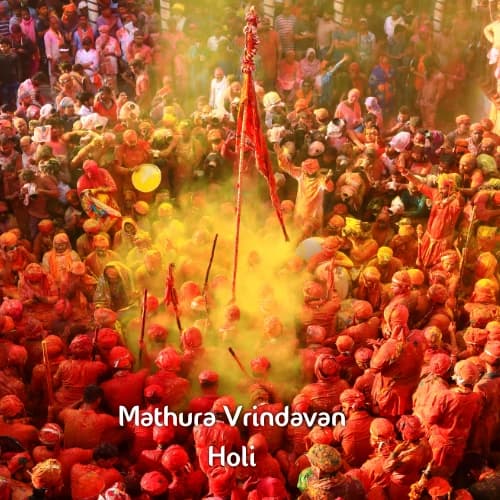
Best months: October–March (8–32°C, dry, clear). Winter: Nov–Feb — 8–26°C, ideal for temple darshan and parikrama. Summer: May–Jun — up to 44°C, avoid outdoor midday activity. Monsoon: Jul–Sep — heavy rain (185–195mm/month) but Janmashtami in August is unmissable. Autumn: Oct — Diwali and Govardhan Puja in perfect 18–32°C weather.
Monthly temperature, rainfall, crowd level and festival calendar for Vrindavan
Winter
high / low
15mm
Rain
65%
Humidity
Moderate
Crowd
Cold mornings, pleasant afternoons. Dense fog possible early Jan.
Makar Sankranti
What to Wear
Heavy woolens, jacket, muffler
Spring
high / low
12mm
Rain
58%
Humidity
High
Crowd
Ideal conditions — warm days, cool evenings, blue skies.
Basant Panchami
What to Wear
Light woolens morning/evening, cotton day
Spring
high / low
10mm
Rain
48%
Humidity
Very High
Crowd
Warm pleasant days. Holi season — festive and energetic.
Holi, Lathmar Holi
What to Wear
Light cotton. Holi clothes (can be ruined)
Summer
high / low
7mm
Rain
35%
Humidity
Low
Crowd
Hot afternoons. Visit temples only morning and evening.
Ram Navami
What to Wear
Light cotton, hat, sunscreen
Summer
high / low
15mm
Rain
28%
Humidity
Very Low
Crowd
Extremely hot. Hot dry loo winds. Avoid midday outdoor activity.
Nirjala Ekadashi
What to Wear
Very light cotton, full sleeves for sun protection
Pre-Monsoon
high / low
55mm
Rain
42%
Humidity
Very Low
Crowd
Very hot with pre-monsoon thunder storms. Uncomfortable.
Nirjala Ekadashi
What to Wear
Light cotton + rain jacket for storms
Monsoon
high / low
185mm
Rain
79%
Humidity
Moderate
Crowd
Heavy monsoon rain. Green and lush but humid. Jhulan Yatra.
Jhulan Yatra
What to Wear
Light cotton, waterproof sandals, umbrella
Monsoon
high / low
195mm
Rain
82%
Humidity
Extreme
Crowd
Heavy rain + Janmashtami. The most important festival of Vrindavan.
Janmashtami ✨
What to Wear
Light cotton + rain protection + extra set of clothes
Post-Monsoon
high / low
115mm
Rain
74%
Humidity
High
Crowd
Rain decreasing. Warm but manageable. Radhashtami.
Radhashtami
What to Wear
Light cotton, light rain protection
Autumn
high / low
25mm
Rain
55%
Humidity
Very High
Crowd
Post-monsoon clear skies. Perfect temperature. Diwali season.
Diwali, Govardhan Puja
What to Wear
Light cotton day, light jacket evening
Winter
high / low
5mm
Rain
50%
Humidity
Very High
Crowd
The best month — ideal temperature, clear skies, Kartik month.
Kartik Maas, Dev Deepawali
What to Wear
Light woolens morning/evening, cotton day
Winter
high / low
10mm
Rain
62%
Humidity
Moderate
Crowd
Cold especially nights. Clear and peaceful. ISKCON Christmas.
ISKCON Christmas
What to Wear
Heavy woolens, warm jacket, muffler, cap
Five seasons — what to expect, festival highlights, pros & cons
Best season — cool, clear, pleasant. Perfect temple darshan conditions. November (Kartik month) is the spiritual high point of the year.
Why to Go
Things to Note
Holi month — March is famous for Lathmar Holi (Barsana), Phoolon ki Holi (ISKCON), Vrindavan Holi. Weather warm-to-hot.
Why to Go
Things to Note
Not recommended for general visits. Extremely hot. Temple darshan only in early morning (5–8 AM) and evening (6–8 PM).
Why to Go
Things to Note
Heavy rain but Janmashtami (August) makes it essential. Lush green Vrindavan, Yamuna flowing full, unique monsoon atmosphere.
Why to Go
Things to Note
The premium festival season — Diwali, Govardhan Puja, Kartik month, Dev Deepawali. Weather perfect. Highest demand for accommodation.
Why to Go
Things to Note
What to pack for each season in Vrindavan — essential items checklist
October
Keshi Ghat lined with diyas. Warm golden light at sunset. Govardhan Puja color and decoration.
November
Daily lamp offerings on the Yamuna. The most atmospheric month for spiritual photography.
February
Yellow flowers, blue skies, spring celebrations. Soft light, minimal crowds.
August
The most dramatically lit night of the year. Decorated temples, lakhs of devotees, incense and flowers.
Mathura Vrindavan Tour Guides
Local taxi service, expert temple guides & complete tour packages — book directly for best rates.
Common questions about Vrindavan climate, temperature and what to expect
Vrindavan has a semi-arid climate with 4 distinct seasons: Winter (November–February): 8–26°C, cold mornings, pleasant days. Spring (March): 17–32°C, Holi season. Summer (May–June): 30–44°C, very hot. Monsoon (July–September): 26–36°C with heavy rainfall. Autumn (October): 18–32°C, perfect post-monsoon. The best weather is November (10–26°C) and February (11–26°C).
Vrindavan temperature ranges: January: 8–22°C | February: 11–26°C | March: 17–32°C | April: 23–38°C | May: 28–43°C | June: 30–43°C | July: 27–36°C | August: 26–34°C | September: 25–34°C | October: 18–32°C | November: 11–26°C | December: 7–22°C.
Vrindavan's monsoon season runs from July to September with heavy rainfall — July: ~185mm, August: ~195mm, September: ~115mm. Outside monsoon, Vrindavan is largely dry. Winter months (November–March) have very little to no rain. The pre-monsoon period (June) can have occasional thunderstorms. Annual average rainfall: approximately 650–700mm, concentrated in July–September.
Vrindavan is hot in summer (May–June: 40–44°C) and moderately cold in winter (December–January: 6–22°C). The most comfortable months are November, February, and October–March in general. The extreme summer heat (loo winds reaching 45°C in peak days) makes May–June very difficult for outdoor travel.
What to wear depends on the season: Winter (Nov–Feb): Heavy woolens (jacket, muffler, warm socks) for mornings/evenings, cotton during day. Spring/March: Light cotton, comfortable footwear, clothes you can stain for Holi. Summer: Very light breathable cotton, full-sleeve for sun protection, large water bottle. Monsoon: Light cotton + waterproof sandals + umbrella. Throughout the year: Modest/traditional clothing preferred for temple visits — no shorts or sleeveless inside temples.
November is the best weather month in Vrindavan — temperatures hover at 10–26°C (ideal for outdoor temple visits), clear blue skies, no rain, and the added spiritual significance of Kartik month. February is the second best — 11–26°C with spring flowers, Basant Panchami celebrations and very comfortable conditions. Both months are perfect for photography, darshan, parikrama and outdoor temple visits.
Vrindavan in December: temperature range 7–22°C. Cold especially at night (drops to 6–8°C). Clear and dry — no rain. Mornings are foggy. Daytime is pleasant once the fog lifts. Pack heavy woolens: jacket, muffler, cap, warm socks. ISKCON Vrindavan celebrates Christmas in a uniquely Vaishnava style. Peaceful and serene atmosphere with fewer tourists than festival months.
Vrindavan August weather: heavy monsoon rainfall (195mm average), temperature 26–34°C, high humidity (80–85%). August is peak monsoon — expect significant rain. However, August is the month of Janmashtami — the most important festival of Vrindavan. The extraordinary spiritual atmosphere of Janmashtami is worth the monsoon conditions. Pack rain protection: waterproof sandals, compact umbrella, extra clothes. Book accommodation 3–4 months ahead.
Discover Mathura Vrindavan – the divine land of Shri Krishna with peaceful darshan, expert local guides, and comfortable travel experiences.
Rated by 38,000+ devotees