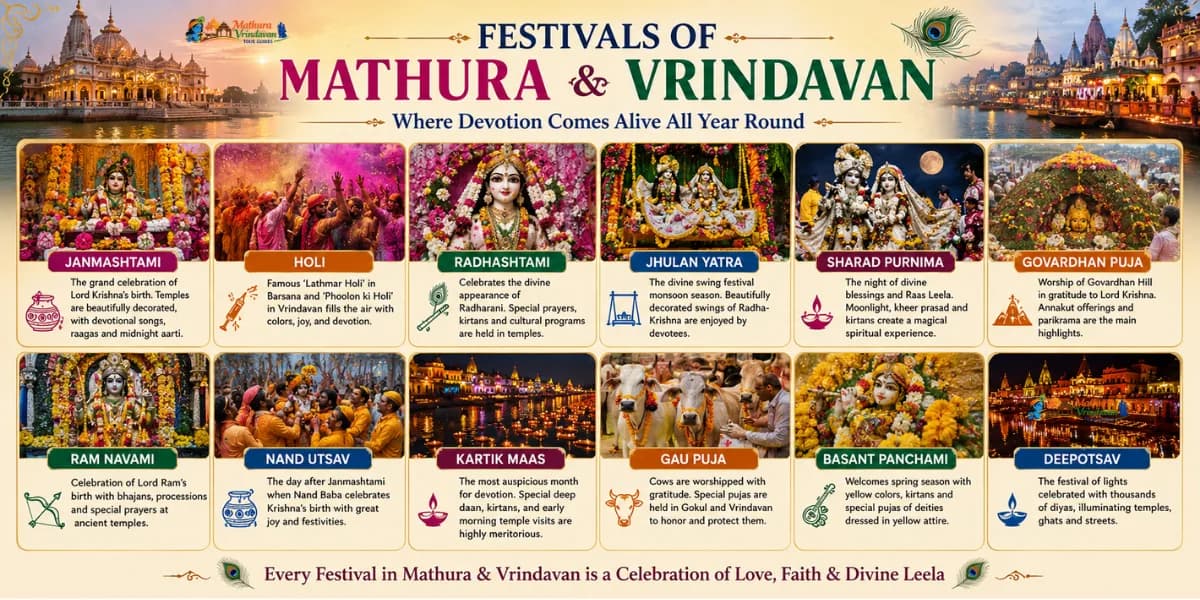
October to March is the best time to visit Vrindavan — pleasant weather and peak festival season. November for Kartik month is the holiest experience. August for Janmashtami at ISKCON is the most intense. March for Holi is world-famous.
Quick Season Picks
Best Overall Season
October – March
Pleasant 8–28°C, clear skies, Diwali, Kartik month deep-daan at Keshi Ghat, Holi, Basant Panchami — peak festivals with perfect weather.
For Janmashtami
August (21 Aug 2026)
ISKCON and Banke Bihari midnight celebrations — the most intense spiritual experience in Vrindavan. Book 3–4 months ahead.
For Holi
March (Holi 2027)
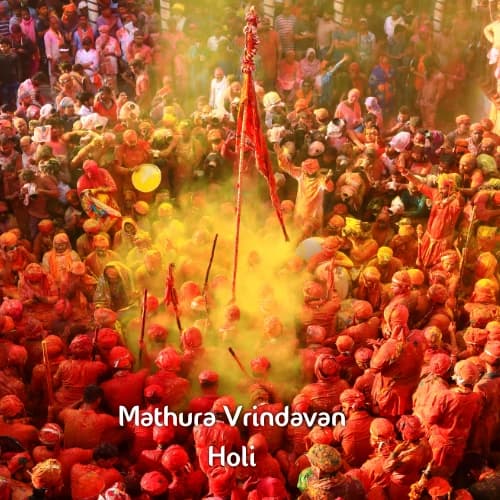
Phoolon ki Holi at ISKCON, Lathmar Holi in Barsana (43 km), colour Holi on the Vrindavan ghats — world-famous. Book 2–3 months ahead.
Quick Answer — Best Time to Visit Vrindavan
Editor's Pick
🥇
Best Overall Season
October – March
Pleasant 8–28°C, clear skies, Diwali, Kartik month deep-daan at Keshi Ghat, Holi, Basant Panchami — peak festivals with perfect weather.
🎊
For Janmashtami
August (21 Aug 2026)
ISKCON and Banke Bihari midnight celebrations — the most intense spiritual experience in Vrindavan. Book 3–4 months ahead.
🎨
For Holi
March (Holi 2027)
Phoolon ki Holi at ISKCON, Lathmar Holi in Barsana (43 km), colour Holi on the Vrindavan ghats — world-famous. Book 2–3 months ahead.
Month by Month
Temperature · Rainfall · Crowd Level · Festivals · What to Wear · Insider Tips
January
8°–22°C · 15mm
Cool and foggy mornings, pleasant sunny afternoons. Dense fog possible in early January.
February
11°–26°C · 12mm
Perfect spring weather — warm sunny days, cool evenings. Spring flowers beginning.
March
17°–32°C · 10mm
Warm days, pleasant evenings. Holi month — Vrindavan is the Holi capital of India.
April
23°–38°C · 7mm
Hot days, warm evenings. Temperature rising quickly toward May.
May
28°–44°C · 15mm
Very hot — temperatures touch 44°C. Hot dry loo winds.
June
30°–43°C · 55mm
Extremely hot + pre-monsoon storms. Dusty and uncomfortable.
July
27°–36°C · 185mm
Monsoon — significant rainfall. Humid and warm. Yamuna banks lush and green.
August
26°–34°C · 195mm
Peak monsoon — heavy rain. Warm and humid. JANMASHTAMI month.
September
25°–34°C · 120mm
Monsoon receding — warm but cooling. Rain decreasing through the month.
October
18°–32°C · 25mm
Post-monsoon perfect — comfortable, clear skies. Best photography conditions.
November
11°–26°C · 5mm
PERFECT — cool, clear, sunny days. The single best month of the year for Vrindavan.
December
7°–22°C · 10mm
Cold — especially nights (5–8°C). Clear and dry. Foggy mornings possible.
Season Guide
November – February · 7–26°C
The undisputed best season for Vrindavan travel.
April – June · 28–44°C
Avoid for general sightseeing. Only for specific pilgrimage.
July – September · 25–36°C
Spiritually significant — Janmashtami + Jhulan Yatra. Lush and beautiful.
October – November · 11–32°C
Peak season — Diwali + Kartik month + perfect weather.
Festival Calendar
All major festivals with dates, locations and significance
| Festival | Date | Location | Significance |
|---|---|---|---|
| Makar Sankranti | 14 Jan 2026 | Yamuna Ghats, Vrindavan | Sacred Yamuna bath on the most auspicious day for river pilgrimage |
| Basant Panchami | 2 Feb 2026 | Banke Bihari + ISKCON | Spring festival — temples decorated in yellow, Saraswati puja, spring celebration |
| Phoolon ki Holi (ISKCON) | 25 Feb 2027 | ISKCON Krishna Balaram, Vrindavan | Flowers thrown instead of colours — unique and beautiful. ISKCON's famous Holi |
| Lathmar Holi | 27–28 Feb 2027 | Barsana (43 km from Vrindavan) | Women beat men with sticks — the most famous unique Braj Holi tradition |
| Rang Wali Holi | 3 Mar 2027 | All Vrindavan + ghats | Main Holi day — colour celebrations across all of Vrindavan |
| Jhulan Yatra | Jul–Aug 2026 | ISKCON + Banke Bihari + all temples | Swing festival — Radha-Krishna swings decorated in all temples for 5 days |
| Janmashtami | 21 Aug 2026 | ISKCON + Banke Bihari (main sites) | Krishna's birthday — ISKCON midnight abhishek internationally famous. Book 3–4 months ahead |
| Nand Utsav | 22 Aug 2026 | Gokul (10 km from Vrindavan) | Day after Janmashtami — Nanda Maharaj celebrates Krishna's birth |
| Radhashtami | Sep 2026 | Barsana + ISKCON + Banke Bihari | Radha Rani's birthday — grand celebrations at all major Vrindavan temples |
| Sharad Purnima | Oct 2026 | Nidhivan + Seva Kunj, Vrindavan | Full moon Raas Leela — Nidhivan is the spiritual centre on this night |
| Diwali — Deep Daan | 20 Oct 2026 | Keshi Ghat, all Yamuna ghats | Thousands of diyas on Keshi Ghat steps and Yamuna — most beautiful Vrindavan night |
| Kartik Month | Oct 28–Nov 26 2026 | All Vrindavan — Keshi Ghat focus | Holiest month — daily Deep Daan at Keshi Ghat, Vrindavan Parikrama, all temples peak |
| Dev Deepawali | Nov 2026 | Keshi Ghat + all ghats | Lamps lit on ghats for the gods — extraordinary sight on the Yamuna |
Makar Sankranti
14 Jan 2026📍 Yamuna Ghats, Vrindavan
Sacred Yamuna bath on the most auspicious day for river pilgrimage
Basant Panchami
2 Feb 2026📍 Banke Bihari + ISKCON
Spring festival — temples decorated in yellow, Saraswati puja, spring celebration
Phoolon ki Holi (ISKCON)
25 Feb 2027📍 ISKCON Krishna Balaram, Vrindavan
Flowers thrown instead of colours — unique and beautiful. ISKCON's famous Holi
Lathmar Holi
27–28 Feb 2027📍 Barsana (43 km from Vrindavan)
Women beat men with sticks — the most famous unique Braj Holi tradition
Rang Wali Holi
3 Mar 2027📍 All Vrindavan + ghats
Main Holi day — colour celebrations across all of Vrindavan
Jhulan Yatra
Jul–Aug 2026📍 ISKCON + Banke Bihari + all temples
Swing festival — Radha-Krishna swings decorated in all temples for 5 days
Janmashtami
21 Aug 2026📍 ISKCON + Banke Bihari (main sites)
Krishna's birthday — ISKCON midnight abhishek internationally famous. Book 3–4 months ahead
Nand Utsav
22 Aug 2026📍 Gokul (10 km from Vrindavan)
Day after Janmashtami — Nanda Maharaj celebrates Krishna's birth
Radhashtami
Sep 2026📍 Barsana + ISKCON + Banke Bihari
Radha Rani's birthday — grand celebrations at all major Vrindavan temples
Sharad Purnima
Oct 2026📍 Nidhivan + Seva Kunj, Vrindavan
Full moon Raas Leela — Nidhivan is the spiritual centre on this night
Diwali — Deep Daan
20 Oct 2026📍 Keshi Ghat, all Yamuna ghats
Thousands of diyas on Keshi Ghat steps and Yamuna — most beautiful Vrindavan night
Kartik Month
Oct 28–Nov 26 2026📍 All Vrindavan — Keshi Ghat focus
Holiest month — daily Deep Daan at Keshi Ghat, Vrindavan Parikrama, all temples peak
Dev Deepawali
Nov 2026📍 Keshi Ghat + all ghats
Lamps lit on ghats for the gods — extraordinary sight on the Yamuna
Practical Guide
Avoid weekends in Oct–Nov — extremely crowded. Best: weekday mornings in winter before 9 AM. Holi at Banke Bihari (one week before main Holi) is extraordinary.
Janmashtami midnight ceremony at ISKCON is world-famous — arrive early afternoon and stay. Phoolon ki Holi at ISKCON (5 days before Holi) is uniquely beautiful.
Kartik month deep-daan: arrive by 5:30 PM, buy a clay diya from the ghat stall, release it when the aarti begins. During Diwali, thousands of diyas cover every step.
Evening light show at 7:15 PM is best in clear winter months (Oct–Feb). 84 leela tableaux illuminate beautifully. Avoid monsoon (light show affected by rain).
Unbroken 480-year puja tradition by hereditary Goswami priests. Mangal aarti at 6 AM is the most intimate aarti in Vrindavan — arrive by 5:50 AM.
Sharad Purnima full moon in October is the most sacred night at Nidhivan — the Raas Leela site. Arrive by 4 PM to secure entry before sunset closing.
Packing Checklist
Advance Booking Guide
Janmashtami (August)
CRITICALBook accommodation 3–4 months ahead. Vrindavan fills completely — hotels, ashrams, dharamshalas all full. ISKCON guesthouses close first. Midnight ceremony entry at ISKCON may require early afternoon queuing.
Holi — March
HIGHBook 2–3 months ahead. Phoolon ki Holi at ISKCON + Lathmar Holi in Barsana + Main Holi — demand spans 7 days. Good hotels near Banke Bihari or ISKCON fill first.
Kartik Month (November)
HIGHBook 2–4 weeks ahead. Deep Daan daily at Keshi Ghat draws crowds throughout the month. Hotels near the ghats fill fastest. Certified Vrindavan guide recommended for Kartik parikrama.
Diwali (October)
HIGHBook 3–5 weeks ahead. Keshi Ghat area hotels fill first — closest to the Deep Daan. ISKCON guesthouse has limited rooms — book early.
Winter non-festival (Dec–Feb)
NORMALFlexible booking. Most weeks have good availability. Exception: Basant Panchami weekend fills faster. January is the most uncrowded month — best hotel value.
Summer (Apr–Jun)
LOWVery flexible. Focus on booking a quality AC hotel — essential in summer. Avoid budget dormitories in summer as heat makes non-AC accommodation unbearable.
Plan Your Vrindavan Visit
Taxi from Delhi or Mathura, expert certified guides, full packages covering Vrindavan + Mathura + Govardhan + Barsana.
People Also Ask
The best time to visit Vrindavan is October to March — pleasant weather (8–28°C), clear skies and peak festival season. November (Kartik month with daily Keshi Ghat Deep Daan) and February (spring + Basant Panchami) are the absolute best months overall. August for Janmashtami at ISKCON and Banke Bihari is the most intense spiritual experience. March for Holi — Phoolon ki Holi at ISKCON and Lathmar Holi in Barsana — is world-famous.
November 2026 is the single best month — entire Kartik month with daily Deep Daan (floating lamps) at Keshi Ghat, Dev Deepawali, Vivah Panchami, and perfect 11–26°C weather. October is a close second (Diwali + post-monsoon perfect weather). For festival-specific visits: August 2026 for Janmashtami (21 Aug), March 2027 for Holi, October 2026 for Diwali (20 Oct). February is the best month if you want perfect weather without specific festivals.
Vrindavan in winter (November–February) is excellent: 7–26°C, clear and dry. November–February is the most comfortable season for all-day temple darshan and Vrindavan Parikrama. December–January nights drop to 5–8°C — pack warm woolens, muffler and cap. Foggy mornings in December–January create atmospheric photography at Keshi Ghat. February has perfect spring weather with Basant Panchami celebrations.
November is Vrindavan's finest month. The entire Kartik month (Oct 28–Nov 26 in 2026) is celebrated with daily Deep Daan at Keshi Ghat — devotees release clay diyas on the Yamuna every evening, creating a river of light. Dev Deepawali lights all ghats with lamps. Vivah Panchami (Krishna-Radha celestial wedding) is celebrated at all temples. Weather is perfect — 11–26°C. This is considered the holiest and most atmospheric time in all of Braj.
Janmashtami (21 Aug 2026) in Vrindavan is extraordinary. ISKCON Krishna Balaram Mandir's midnight abhishek (sacred bath of Krishna deity) is internationally famous — thousands attend from across the world. Banke Bihari Temple conducts its own special darshan. The entire city transforms into a festival — temples lit, bhajans all night, processions. Expect extreme crowds. Book accommodation 3–4 months ahead — hotels and dharamshalas fill completely.
Phoolon ki Holi is ISKCON Vrindavan's unique version of Holi — flowers (phool) are thrown instead of colours. Held approximately 5 days before the main Holi at ISKCON Krishna Balaram Mandir. Petals of marigold, rose and other flowers shower the crowd as the celebration unfolds. This is one of the most visually stunning festivals in Vrindavan — a bucket-list experience. Exact dates: approximately 25 February 2027.
Kartik month (October–November annually, Oct 28–Nov 26 in 2026) is the holiest month in Vrindavan. Devotees from across India come to perform Kartik parikrama (walking circumambulation of Vrindavan), Deep Daan (releasing clay lamps on the Yamuna at Keshi Ghat every evening), and special temple darshan. The spiritual atmosphere during Kartik is considered the most intense of the year in all of Braj. Dev Deepawali on Kartik Purnima is the visual highlight.
Banke Bihari Temple, Vrindavan is open year-round: morning darshan 7:45 AM–12 PM, evening darshan 5:30–9 PM. The unique 'parda' (curtain) darshan tradition — the curtain is briefly opened to reveal the deity — operates at all times. Best for darshan: weekday mornings in winter (November–February) before 9 AM. Holi week (one week before main Holi) at Banke Bihari is extraordinary. Avoid festival-day afternoons when queues can be 2–3 hours.
Vrindavan Parikrama (the 10 km circumambulation of Vrindavan) can be done year-round but the experience varies significantly by season. Best: November–February for cool weather and the most atmospheric parikrama (especially Kartik month when thousands do it daily, often pre-dawn). Doable: October, March, September. Challenging but manageable: April (early morning only). Avoid: May–June (extreme heat). August parikrama during Janmashtami is uniquely intense but crowded.
The best time for photography in Vrindavan is October–November for golden post-monsoon light, blue skies, Diwali and Kartik Deep Daan at Keshi Ghat. The Keshi Ghat aarti with flame reflections on the dark Yamuna is photogenic year-round — best in Kartik month with floating diyas. March Holi gives extraordinary colour photography. Foggy December–January mornings create atmospheric shots on Vrindavan lanes and ghats. Janmashtami in August gives extraordinary crowd and devotion photography.
Yes — Vrindavan is 140 km from Delhi, approximately 2.5–3 hours by car or train. Day trip is possible: depart Delhi by 6:30 AM, arrive Vrindavan by 9:30–10 AM, visit Banke Bihari, ISKCON, Prem Mandir and Keshi Ghat (evening aarti 6 PM), return by 9–10 PM. Combine with Mathura (12 km from Vrindavan) for an extended spiritual circuit. Best season for a day trip: October–March for pleasant weather.
Vrindavan in December: daytime 18–22°C (comfortable for temple darshan and walking), nights cold at 5–8°C. Clear and dry with no rain. Morning fog possible in late December–early January. Pack warm woolens including a jacket, muffler and cap for evening visits. December is peaceful and uncrowded — Banke Bihari and ISKCON darshan without major queues. ISKCON celebrates Christmas in a unique Vaishnava style — worth visiting for a distinctive experience.
Book 3–4 months ahead for Janmashtami (August) — Vrindavan hotels fill completely. Book 2–3 months ahead for Holi (March) — 7-day festival period means sustained demand. Book 2–4 weeks ahead for Kartik month (November) and Diwali (October). December–February non-festival periods allow flexible last-minute booking. Budget tip: dharamshalas and ashrams near Banke Bihari offer accommodation from ₹500/night — check availability through our team for the best rates.
Discover Mathura Vrindavan – the divine land of Shri Krishna with peaceful darshan, expert local guides, and comfortable travel experiences.
Rated by 38,000+ devotees