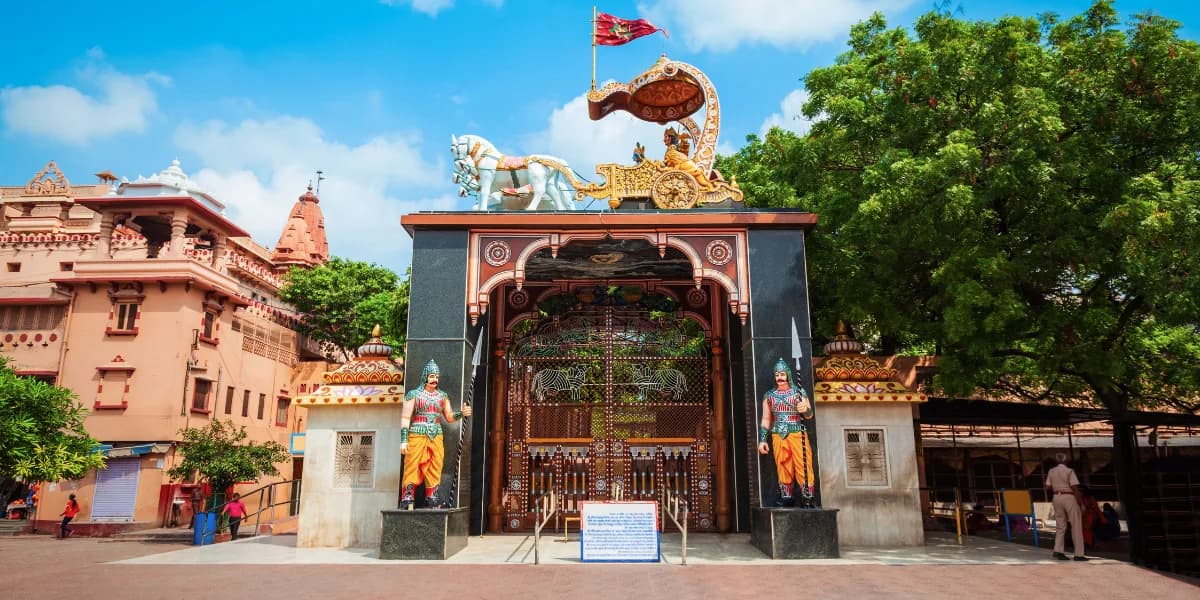
October to March is the best time to visit Mathura — pleasant weather (8–28°C) and peak festival season. August for Janmashtami at Krishna's actual birthplace. March for Holi on the Mathura ghats. November for Kartik month deep-daan on the Yamuna.
Quick Season Picks
Best Overall Season
October – March
Pleasant 8–28°C, clear skies, Diwali, Kartik month, Holi, Basant Panchami — peak festivals with perfect weather.
For Janmashtami
August (Midnight Ceremony)
Krishna's birthday at his actual birthplace — Sri Krishna Janmabhoomi. The most sacred event in Mathura. Book 3–4 months ahead.
For Holi
March (Holi + Lathmar Holi)
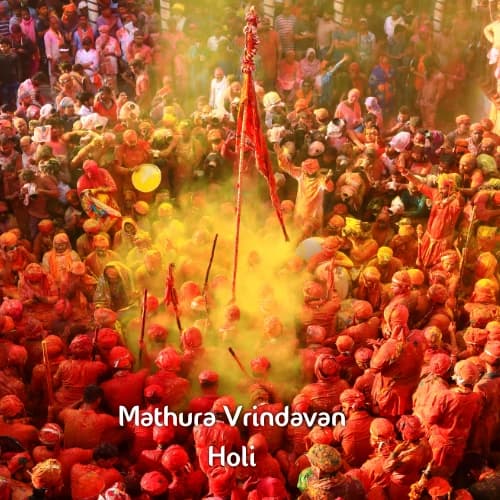
Holi on Mathura ghats with Yamuna backdrop. Lathmar Holi in Barsana (43 km). The most famous Holi in India — book 2–3 months ahead.
Quick Answer — Best Time to Visit Mathura
Editor's Pick
🥇
Best Overall Season
October – March
Pleasant 8–28°C, clear skies, Diwali, Kartik month, Holi, Basant Panchami — peak festivals with perfect weather.
🎊
For Janmashtami
August (Midnight Ceremony)
Krishna's birthday at his actual birthplace — Sri Krishna Janmabhoomi. The most sacred event in Mathura. Book 3–4 months ahead.
🎨
For Holi
March (Holi + Lathmar Holi)
Holi on Mathura ghats with Yamuna backdrop. Lathmar Holi in Barsana (43 km). The most famous Holi in India — book 2–3 months ahead.
Month by Month
Temperature · Rainfall · Crowd Level · Festivals · What to Wear · Insider Tips
January
8°–22°C · 15mm
Cool and foggy mornings, sunny afternoons.
February
11°–25°C · 12mm
Perfect spring weather — warm days, cool evenings.
March
17°–31°C · 10mm
Warm pleasant days. Holi month!
April
23°–38°C · 7mm
Hot afternoons. Morning and evening visits only.
May
28°–43°C · 15mm
Extremely hot. 40–44°C with loo winds.
June
30°–43°C · 55mm
Very hot + pre-monsoon storms.
July
27°–36°C · 185mm
Heavy monsoon. Yamuna full and flowing.
August
26°–34°C · 195mm
Heavy monsoon + JANMASHTAMI at Janmabhoomi!
September
25°–34°C · 115mm
Rain decreasing. Warm but cooling.
October
18°–32°C · 25mm
Post-monsoon perfect. Clear skies. Diwali!
November
11°–26°C · 5mm
PERFECT weather. Cool, clear, Kartik month.
December
7°–22°C · 10mm
Cold nights (7°C). Clear peaceful days.
Season Guide
November – February · 7–26°C
The undisputed best season for Mathura travel.
April – June · 28–44°C
Avoid for general sightseeing. Only for specific pilgrimage.
July – September · 25–36°C
Spiritually significant with Janmashtami. Lush and beautiful.
October – November · 11–32°C
Peak season — Diwali, Kartik month, perfect weather.
Festival Calendar
All major festivals with exact dates, locations and significance
| Festival | Date | Location | Significance |
|---|---|---|---|
| Makar Sankranti | 14 Jan 2026 | Vishram Ghat, Mathura | Sacred bath in Yamuna on the holiest day for river bathing |
| Basant Panchami | 2 Feb 2026 | Mathura temples | Spring festival — temples decorated in yellow, saraswati puja |
| Holi — Mathura Ghats | 3 Mar 2027 | Vishram Ghat + all ghats | Holi on the Yamuna ghats — best Holi setting in the Braj region |
| Lathmar Holi | 27–28 Feb 2027 | Barsana (43 km from Mathura) | Women beat men with sticks — most famous unique Braj tradition |
| Ram Navami | 26 Mar 2026 | All temples, Mathura | Birthday of Lord Ram — major temple celebrations and processions |
| Janmashtami | 21 Aug 2026 | Sri Krishna Janmabhoomi (main) | Krishna's birthday at his actual birthplace — midnight ceremony, book 3–4 months ahead |
| Nand Utsav | 22 Aug 2026 | Gokul (10 km from Mathura) | Day after Janmashtami — celebrations in Krishna's childhood village |
| Radhashtami | Sep 2026 | Barsana + Vrindavan nearby | Radha Rani's birthday — major celebration at Barsana (43 km) |
| Diwali | 20 Oct 2026 | Vishram Ghat, all Mathura ghats | Fireworks over the Yamuna, thousands of diyas — extraordinary sight on the ghats |
| Govardhan Puja | 21 Oct 2026 | Govardhan Hill (22 km) | Annakut — mountain of food offered to Govardhan Hill, day after Diwali |
| Dev Deepawali | Nov 2026 | Vishram Ghat, all Mathura ghats | Lamps lit on ghats for the gods — spectacular sight on the Yamuna |
| Gita Jayanti | 1 Dec 2026 | Gita Mandir, Mathura | Anniversary of Bhagavad Gita — special celebrations at Mathura's Gita Mandir |
Makar Sankranti
14 Jan 2026📍 Vishram Ghat, Mathura
Sacred bath in Yamuna on the holiest day for river bathing
Basant Panchami
2 Feb 2026📍 Mathura temples
Spring festival — temples decorated in yellow, saraswati puja
Holi — Mathura Ghats
3 Mar 2027📍 Vishram Ghat + all ghats
Holi on the Yamuna ghats — best Holi setting in the Braj region
Lathmar Holi
27–28 Feb 2027📍 Barsana (43 km from Mathura)
Women beat men with sticks — most famous unique Braj tradition
Ram Navami
26 Mar 2026📍 All temples, Mathura
Birthday of Lord Ram — major temple celebrations and processions
Janmashtami
21 Aug 2026📍 Sri Krishna Janmabhoomi (main)
Krishna's birthday at his actual birthplace — midnight ceremony, book 3–4 months ahead
Nand Utsav
22 Aug 2026📍 Gokul (10 km from Mathura)
Day after Janmashtami — celebrations in Krishna's childhood village
Radhashtami
Sep 2026📍 Barsana + Vrindavan nearby
Radha Rani's birthday — major celebration at Barsana (43 km)
Diwali
20 Oct 2026📍 Vishram Ghat, all Mathura ghats
Fireworks over the Yamuna, thousands of diyas — extraordinary sight on the ghats
Govardhan Puja
21 Oct 2026📍 Govardhan Hill (22 km)
Annakut — mountain of food offered to Govardhan Hill, day after Diwali
Dev Deepawali
Nov 2026📍 Vishram Ghat, all Mathura ghats
Lamps lit on ghats for the gods — spectacular sight on the Yamuna
Gita Jayanti
1 Dec 2026📍 Gita Mandir, Mathura
Anniversary of Bhagavad Gita — special celebrations at Mathura's Gita Mandir
Practical Guide
Winter mornings (sunrise ~7 AM) offer the best photography light. Aarti in Diwali/Kartik month is spectacularly enhanced by thousands of diyas.
Janmashtami midnight at Janmabhoomi is unrepeatable. Normal darshan is best early morning (6–8 AM) before crowds. Security check — no phones inside.
25-ghat full parikrama in winter takes 2–3 hours on foot. Sunrise walk (before 7 AM) gives you mostly empty ghats. Hire a guide who knows every story.
Holi at Dwarkadhish is one of the most famous in India — the temple courtyard celebrations. Arrive by 8 AM on Holi day to get inside the temple.
Packing Checklist
Advance Booking Guide
Janmashtami (August)
CRITICALBook accommodation and guided tour 3–4 months ahead. Mathura hotels fill completely. Midnight ceremony at Janmabhoomi requires early arrival.
Holi (March)
HIGHBook 2–3 months ahead. Demand for Barsana Lathmar Holi + Mathura ghat Holi combined is extremely high. Most good hotels fill by January.
Diwali (October)
HIGHBook 4–6 weeks ahead. Mathura + Vrindavan Diwali draws large crowds. Vishram Ghat area hotels fill first.
Kartik Month (November)
HIGHBook 2–4 weeks ahead. Deep-dan daily on all ghats — demand is high throughout the month, not just weekends.
Winter (Dec–Feb, non-festival)
NORMALFlexible booking. Most weeks have good availability. Exception: Basant Panchami and Makar Sankranti weekends fill faster.
Summer (Apr–Jun)
LOWVery flexible. Most hotels have availability. Focus on booking a quality AC hotel — the right room makes summer bearable.
From Mathura
Mathura sits at the centre of the Braj region — the best base for all Braj sacred sites
Temple city of Krishna — ISKCON, Banke Bihari, Prem Mandir, Keshi Ghat aarti
Sacred hill — 21 km parikrama, Radha Kund, Kusum Sarovar, Annakut celebrations
Krishna's childhood village — Brahmanda Ghat, Nand Bhavan, Dahi Handi
Radha's birthplace — Lathmar Holi, Radha Rani Temple on Brahmagiri Hill
Taj Mahal and Agra Fort — combine for a complete Golden Triangle Braj itinerary
Nanda Maharaj's village — Nandishvar Hill, Lathmar Holi, Nand Utsav
Plan Your Mathura Visit
Taxi from Mathura station, expert certified local guides, full tour packages covering Mathura + Vrindavan + Govardhan + Barsana.
People Also Ask
The best time to visit Mathura is October to March — pleasant weather (8–28°C), clear skies and peak festival season. November (Kartik month) and February (spring) are the two finest months. August is essential for Janmashtami at Sri Krishna Janmabhoomi — the most sacred pilgrimage moment at Krishna's actual birthplace. March for Holi on the Mathura ghats is spectacular. Avoid May–June (40–44°C extreme heat).
November 2026 is the best single month for Mathura — Kartik month brings daily deep-daan (floating lamps) on all Yamuna ghats, Dev Deepawali, Vivah Panchami, and perfect 11–26°C weather. February is a close second for spring weather and Basant Panchami. For festival experiences: August for Janmashtami (21 Aug 2026), March 2027 for Holi, October for Diwali (20 Oct 2026).
Mathura in winter is excellent for travel. December–January: 7–22°C, cold nights (pack heavy woolens and jacket), clear dry days ideal for temple darshan. Fog on winter mornings creates beautiful atmosperic photographs at Vishram Ghat. February: 11–25°C — spring arrives, Basant Panchami, perfect temperature for all-day sightseeing. Winter is Mathura's peak season for pleasant weather.
October is one of the best months for Mathura — post-monsoon perfect weather (18–32°C), crystal-clear skies, and Diwali celebrations on the Yamuna ghats. Diwali in Mathura features fireworks over the Yamuna, thousands of diyas on the ghat steps, and the spectacular Vishram Ghat aarti illuminated by lamps. Govardhan Puja (day after Diwali) at Govardhan Hill (22 km) is also extraordinary.
Janmashtami at Shri Krishna Janmabhoomi in Mathura (21 Aug 2026) is one of the most sacred events in India — celebrating Krishna's birthday at his actual birthplace. The midnight abhishek ceremony with special aarti, tens of thousands of devotees, and the charged spiritual atmosphere at the actual garbha griha (prison cell) where Krishna was born is extraordinary. Book accommodation 3–4 months ahead — hotels fill completely.
Holi in Mathura is celebrated on the ghats with the Yamuna as the backdrop — Vishram Ghat and surrounding ghats become the centre of colour celebrations. The Braj region (Mathura + Vrindavan + Barsana + Nandgaon) hosts the best Holi in India over 5–7 days in late February–March. Lathmar Holi in Barsana (43 km) — where women beat men with sticks — is the most famous. Holi 2027: approximately 3 March 2027.
Packing for Mathura depends on the season: October–March — light woolens + warm jacket for evenings (Dec–Jan), cotton for afternoons, comfortable walking shoes for ghat parikrama. August (Janmashtami) — light cotton, rain protection, extra clothes (expect to get wet in monsoon). March (Holi) — old clothes, protective eyewear, hair oil, waterproof phone case. Summer — full-sleeve cotton, hat, 2L water minimum, electrolytes.
Yes — Mathura is an easy day trip from Delhi. By train: 145 km, 1.5–2 hrs from New Delhi/Hazrat Nizamuddin to Mathura Junction. By car: 165 km via Yamuna Expressway, 2–2.5 hrs. Depart by 7 AM — cover Janmabhoomi, Vishram Ghat, Dwarkadhish (4–5 hrs), optionally continue to Vrindavan (12 km). Return to Delhi by 8–9 PM. Our Mathura day trip packages include transport, guide and all temple arrangements.
Vrindavan is 12 km from Mathura — approximately 20–25 minutes by taxi (₹300–450). Both cities are comfortably covered in a 2-day trip or as a packed 1-day itinerary (start by 6 AM). Mathura morning (Janmabhoomi + Vishram Ghat + Dwarkadhish) → Vrindavan afternoon (Banke Bihari + ISKCON + Keshi Ghat aarti). Best season for both: October–March.
Best photography conditions in Mathura: November–February for golden morning light on Vishram Ghat steps (arrive before 7 AM). October for Diwali — thousands of diyas on the ghats with fireworks overhead. March for Holi colour explosions at the ghats. August for dramatic monsoon skies during Janmashtami. The Vishram Ghat Yamuna Aarti (6:30–7:30 PM) is photogenic year-round — best in Kartik month (October–November).
November is arguably the best single month to visit Mathura. The entire Kartik month is celebrated with evening deep-daan on all Yamuna ghats (floating lamps released into the Yamuna), Dev Deepawali (lamps lit on the ghats for the gods), and Vivah Panchami. Weather is perfect — 11–26°C, cool mornings, warm afternoons. Combine with Vrindavan (12 km) where Keshi Ghat deep-daan is extraordinary during Kartik.
All major Mathura temples are open year-round: Shri Krishna Janmabhoomi (6 AM–noon, 4–9 PM), Dwarkadhish Mandir (5 aartis daily, mangal aarti 5:30 AM), Vishram Ghat (24 hours, aarti 6:30–7:30 PM daily), Birla Mandir, Gita Mandir, Bhuteshwar Mahadev and 25+ additional temples. Summer (May–June) — temples maintain schedules but expect extreme heat between visits. Security check at Janmabhoomi — no phones or bags allowed inside.
Book 3–4 months ahead for Janmashtami (August), 2–3 months for Holi (March), 4–6 weeks for Diwali (October). Kartik month (November) fills hotels fast — book 2–4 weeks ahead. Winter non-festival periods (December, January, February) have flexible availability. Budget accommodation fills faster than hotels during festivals — book early regardless of category. Our team can arrange accommodation recommendations at any budget level.
Discover Mathura Vrindavan – the divine land of Shri Krishna with peaceful darshan, expert local guides, and comfortable travel experiences.
Rated by 38,000+ devotees