Mathura Vrindavan Famous Food: Peda and Lassi Guide
Rajkumar Chaudhary
19 October 2026
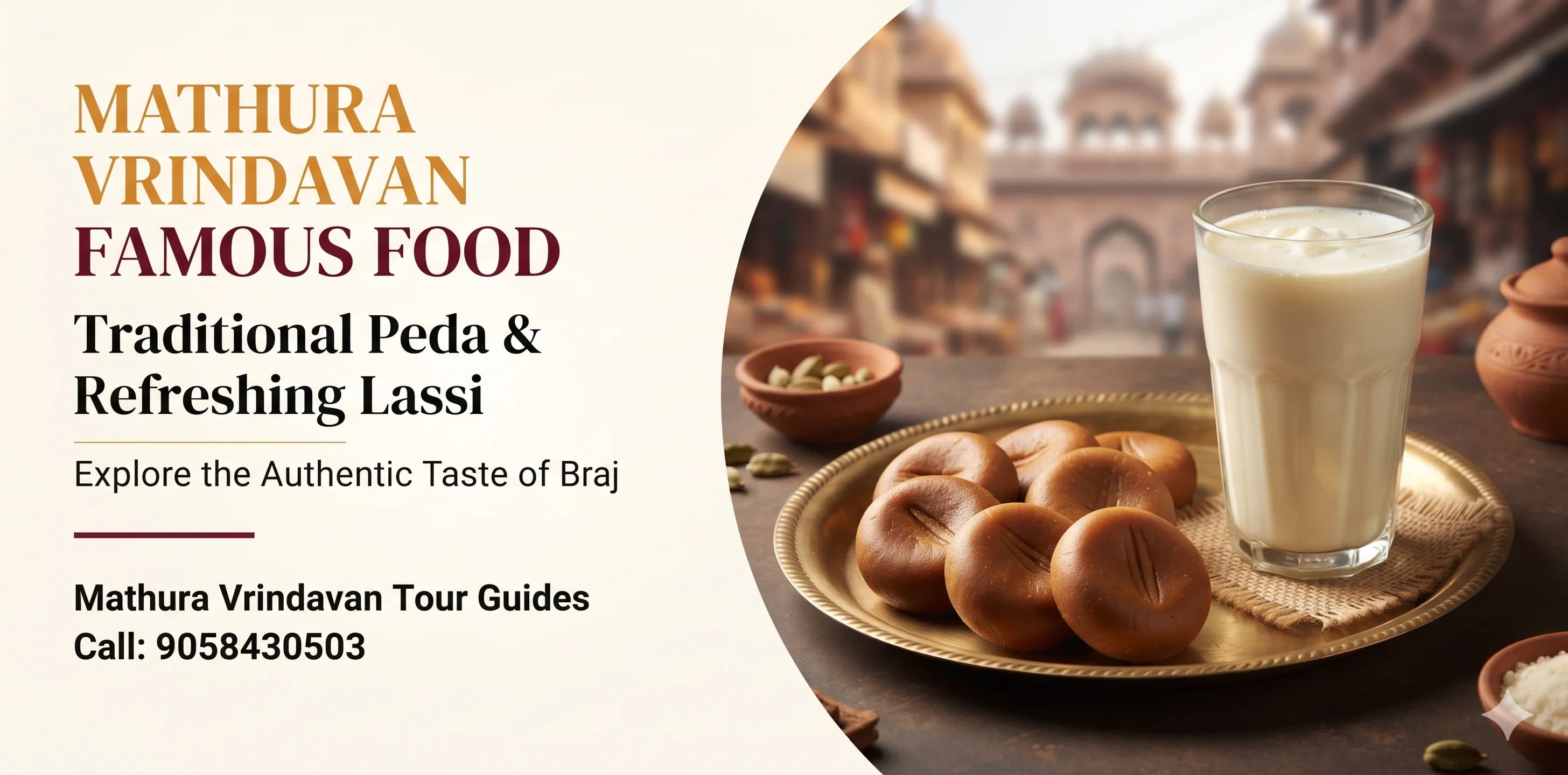
Mathura and Vrindavan are well known for their traditional peda and lassi. Mathura peda is a milk-based sweet usually prepared with khoya, sugar and aromatic flavourings, giving it a rich taste and distinctive brown colour. Lassi is a refreshing yoghurt-based drink commonly enjoyed sweet and chilled, especially in warm weather. Visitors can explore local sweet shops and lassi outlets around Mathura's markets and Vrindavan's temple areas. Choose shops with good hygiene, fresh products and proper food storage, particularly during the summer months.
Ready for your Braj Yatra?
Let us design the perfect pilgrimage package for you.
Mathura and Vrindavan are famous for their temples, Krishna bhakti and traditional Braj food. For many travellers, a visit is incomplete without tasting Mathura peda and enjoying a glass of chilled lassi after darshan.
Mathura peda is one of the region's best-known sweets, prepared primarily with khoya, sugar and traditional flavourings. Lassi, made from yoghurt, is another popular choice, especially during the warmer months when visitors spend hours walking between temples and markets.
As someone familiar with local Braj travel, I recommend making time for the food as well as the pilgrimage. You can explore the sweet shops around Holi Gate and other markets in Mathura, or enjoy refreshments near Vrindavan's temple areas. The important thing is to choose a clean shop, check freshness and leave enough time for your temple visits.
This guide covers Mathura Vrindavan famous food, traditional peda, lassi, where to find these local favourites, what else to try and how to include food stops in your itinerary.
Mathura Vrindavan Famous Food: Quick Overview
| Food | What makes it special | Where to look |
|---|---|---|
| Mathura peda | Rich, milk-based sweet with a characteristic brown colour | Holi Gate, Krishna Nagar and other Mathura markets |
| Lassi | Creamy yoghurt-based drink served sweet or in other local variations | Sweet shops and dairy outlets in Mathura and Vrindavan |
| Bedai and sabzi | Popular breakfast combination with a spicy potato preparation | Traditional breakfast shops in Mathura |
| Kachori | Fried savoury snack with a spicy filling | Local markets and food stalls |
| Jalebi | Sweet, syrup-soaked fried dessert | Sweet shops and breakfast stalls |
| Khurchan | Traditional milk-based sweet made from milk solids collected during cooking | Established sweet shops in Mathura |
| Makhan Mishri | Butter served with sugar crystals, associated with Krishna's childhood traditions | Selected devotional food outlets and sweet shops |
The availability and preparation of these foods vary between shops. If you have limited time, start with Mathura peda and lassi, then choose other dishes according to your appetite and travel schedule.
1. Mathura Peda: The Famous Sweet of Braj
Mathura peda is the food most visitors associate with the city. It is prepared from khoya, also known as mawa, which consists of milk solids obtained by reducing milk.
The khoya is cooked and combined with sugar and flavourings such as cardamom. Traditional methods can produce a rich, granular texture and a distinctive brown colour. Recipes differ, so the sweetness, texture and shade may vary from one shop to another.
Mathura peda is popular with pilgrims, local families and travellers buying sweets to take home.
Why is Mathura peda famous?
Mathura has a long tradition of milk-based sweets, reflecting the wider dairy culture of Braj. Peda has become closely associated with the city's identity and is commonly bought during religious visits, festivals, family celebrations and weddings.
The sweet is also associated with Krishna worship. Peda is offered in devotional settings, although each temple has its own rules about how offerings may be presented.
For travellers, a box of Mathura peda is a popular edible gift because it represents a well-known local speciality.
What does Mathura peda taste like?
Traditional Mathura peda generally has a rich milk flavour, a firm yet slightly crumbly texture and a caramel-like sweetness. Depending on the recipe, it may contain cardamom or other flavourings.
Some versions have a deeper brown colour from the cooking process, while others are lighter. Do not assume that every variation has the same taste or texture.
When buying peda, ask the shopkeeper about the ingredients, preparation and recommended storage.
2. Where to Buy Mathura Peda
Mathura has several established sweet shops where visitors can look for traditional peda. Rather than purchasing sweets from the first stall you see near a crowded entrance, take a moment to check the shop, packaging and prices.
Holi Gate, Mathura
Holi Gate is one of the places visitors can consider when looking for traditional Mathura sweets. The area has established sweet shops, including Brijwasi Sweets and Shankar Mithai Wala.
It can be a convenient stop before or after visiting other places in Mathura, depending on your itinerary.
Krishna Nagar and Dholi Pyau
These Mathura areas also have sweet shops where visitors can look for peda and other milk-based sweets.
Radhika Sweets has listed outlets in locations including Krishna Nagar and Dholi Pyau. The exact stock and operating hours should be confirmed locally.
Near Shri Krishna Janmabhoomi
If your Mathura itinerary includes Shri Krishna Janmabhoomi, you may prefer to buy sweets in the surrounding market area rather than making a separate trip across town.
Brijwasi Sweets is among the established names listed for Mathura. Compare prices and packaging before making a purchase.
Can you buy peda in Vrindavan?
Yes. Visitors can also find peda and other sweets in Vrindavan. Sweet shops include Brijwasi Sweets, Hira Sweets and Bharti Mithai Wala.
Availability, freshness and prices can differ by outlet. Choose a shop that handles food hygienically and can explain how the sweets should be stored.
Tips for buying Mathura peda
Before purchasing a box to take home, consider these points:
Check freshness: Ask when the batch was prepared.
Ask about ingredients: This is especially important for anyone with milk allergies or other dietary restrictions.
Compare prices: Check the price per kilogram or box size before buying.
Inspect packaging: Prefer properly packed sweets over items left exposed to dust and handling.
Ask about shelf life: Do not assume all peda varieties remain fresh for the same length of time.
Consider the journey: If you are travelling for several hours, ask the seller about suitable storage and how soon the sweets should be consumed.
These simple checks are useful whether you are buying a small quantity for yourself or several boxes for family and friends.
3. Lassi: A Refreshing Drink During Your Vrindavan Visit
Lassi is a yoghurt-based drink commonly enjoyed in North India. Depending on the shop and recipe, it may be sweet, lightly flavoured or topped with cream.
In Mathura and Vrindavan, a glass of lassi can be a refreshing choice after a morning of temple visits. It is particularly appealing during summer, when the weather can be hot and walking between crowded temple areas becomes tiring.
What makes local lassi popular?
Lassi is valued for its creamy consistency and yoghurt flavour. Some outlets serve it in tall glasses, while others use traditional clay cups or different serving vessels.
The exact recipe depends on the seller. Some versions are thick and rich, while others are lighter and easier to drink.
If you enjoy dairy products, trying lassi from a clean, established outlet is an easy way to experience another part of Braj's food culture.
Sweet lassi or salty lassi?
Sweet lassi is made with yoghurt and sugar, sometimes with additional flavouring. Salty versions may contain salt and spices.
The availability of each type depends on the outlet. Ask the shopkeeper what is freshly prepared rather than assuming every shop sells both.
If you are unfamiliar with particularly sweet drinks, consider starting with a smaller serving.
4. Where to Find Lassi in Mathura and Vrindavan
Lassi is generally available at selected sweet shops, dairy outlets and refreshment stalls in the two towns.
Around Mathura's markets
You can look for lassi around the main market areas, including the broader Holi Gate area. This can fit naturally into a food stop when you are exploring Mathura's temples and shopping streets.
Some visitors prefer combining a savoury breakfast, such as bedai and sabzi, with a lassi or another drink later in the morning.
Near Vrindavan's temple areas
The markets around Vrindavan's main temples have refreshment outlets where visitors can look for yoghurt-based drinks and sweets.
If you are visiting Banke Bihari Temple, remember that the nearby lanes can be crowded. Plan your refreshment stop before entering the busiest part of the old town or after leaving the temple area.
How to choose a good lassi outlet
Food hygiene is more important than the appearance of a glass or the popularity of a shop.
Look for an outlet where the preparation area appears clean, the ingredients are handled properly and the lassi is freshly prepared or appropriately refrigerated.
Avoid drinks that have been left unrefrigerated for long periods in hot weather. Ask for freshly prepared lassi if possible, and use your judgement about the cleanliness of the premises.
People who need to be careful with dairy, sugar or rich foods should consider their dietary requirements before ordering.
5. Other Famous Food to Try in Mathura and Vrindavan
Although peda and lassi are the main focus, the local food scene includes several other dishes worth considering.
Bedai and potato sabzi
Bedai is a popular fried breakfast bread commonly served with a spicy potato preparation. It makes a substantial meal for visitors starting their pilgrimage early.
If you are planning morning darshan, eat beforehand when appropriate or schedule breakfast after the temple visit, depending on the opening hours.
Kachori
Kachori is another common savoury snack found in local markets. Fillings and spice levels vary, so ask the seller about the preparation if you prefer milder food.
Choose a busy stall with good hygiene and food that appears freshly prepared.
Jalebi
Jalebi is a familiar Indian sweet made by frying batter and soaking it in sugar syrup. It is often available at traditional sweet shops and breakfast stalls.
Freshly prepared jalebi is generally preferred for its crisp texture, although quality and preparation vary between shops.
Khurchan
Khurchan is a traditional milk-based sweet associated with Mathura. It is made from the layers of milk solids that collect during the cooking process and is commonly combined with sugar and flavourings.
Its texture differs from peda, making it worth trying if you enjoy milk-based sweets.
Makhan Mishri
Makhan mishri combines butter with sugar crystals and is associated with devotional traditions surrounding Krishna's childhood.
It may be available through selected devotional food outlets and sweet shops. If you wish to offer it at a temple, check the current offering rules first.
Poori and sabzi
Poori and sabzi are practical options for visitors seeking a filling vegetarian meal. They can work well before a day of sightseeing, particularly when you have several temples to visit.
Choose a hygienic restaurant or food outlet and allow sufficient time for the meal and onward travel.
6. Can You Combine Food Shopping With Temple Darshan?
Yes. Planning your food stops around the sightseeing route is usually more practical than travelling across town just to purchase sweets.
For example, if you are spending the morning in Mathura, you can arrange a visit to Shri Krishna Janmabhoomi and other selected attractions, then stop at a local sweet shop before continuing towards Vrindavan.
If you are visiting Banke Bihari Temple, keep the crowded old-town lanes in mind. It is generally more convenient to organise shopping and refreshments outside the busiest section of the route.
A few points are worth remembering:
Check temple darshan timings before planning the day.
Allow extra time for walking and queues.
Do not carry large boxes of sweets through the busiest lanes unnecessarily.
Follow current temple rules for mobile phones, bags and religious offerings.
Keep food properly packed during travel, following the seller's storage advice.
For more information about planning a visit to the main shrines, see our Mathura Vrindavan Temple Guide.
7. Food Shopping and the Banke Bihari Temple Rules
Many visitors associate peda with the devotional traditions of Braj. However, buying a sweet for home, eating it during the trip and presenting an offering inside a temple are different activities.
Banke Bihari Temple has specific rules governing how offerings may be presented. Under the restriction announced in October 2026, devotees must not throw pedas, flower garlands or tulsi malas towards the deity.
If you intend to make a religious offering, follow the current instructions from the temple authorities. Do not assume that a sweet purchased from a nearby shop can be presented in any manner you choose.
For further information, read our Banke Bihari Temple Entry Rules and Dress Code Guide.
8. Suggested Mathura Vrindavan Food and Temple Itinerary
If you want to experience both the pilgrimage sites and local food, the following plan offers a flexible starting point.
Morning: Mathura
Begin with the places that matter most to your pilgrimage. Depending on the current schedule, these may include Shri Krishna Janmabhoomi and Dwarkadhish Temple.
If you enjoy a traditional breakfast, look for freshly prepared bedai and sabzi at a clean local outlet.
Late morning: Peda shopping
After sightseeing in Mathura, visit an established sweet shop around Holi Gate or another suitable market area.
Purchase the quantity you need, and ask about freshness, packaging and storage before continuing your journey.
Afternoon: Vrindavan
Travel to Vrindavan and visit selected temples according to their current darshan timings. Keep your schedule flexible because crowded streets and waiting times can change the pace of the day.
Late afternoon: Lassi or a refreshment break
After the temple visits, stop at a clean local dairy or sweet shop for lassi if it is available.
A break can be particularly helpful during warmer weather or after walking through the older parts of Vrindavan.
Evening: Prem Mandir
If time permits, finish your day at Prem Mandir. Check current visitor timings before planning around the evening illumination.
This is only a suggested framework. Your route should be adjusted according to your arrival time, temple schedules, traffic and the needs of your group.
9. Tour Packages for Mathura Vrindavan Food and Temple Visits
If you would like to explore Mathura's famous sweets alongside the major temples, the best itinerary depends on the amount of time available.
One Day Vrindavan Tour Package
Suitable for travellers concentrating on Vrindavan's main temples, with time for a planned refreshment stop where the itinerary permits.
View the One Day Vrindavan Tour Package
Two-Day Mathura Vrindavan Tour Package
A more comfortable choice if you want to divide sightseeing between Mathura and Vrindavan, leaving room for local markets and food stops.
View the Two-Day Mathura Vrindavan Tour Package
Three-Day Agra Mathura Vrindavan Tour Package
Suitable for travellers who want to combine the Braj pilgrimage with sightseeing in Agra.
View the Three-Day Agra Mathura Vrindavan Tour Package
All Mathura Vrindavan Tour Packages
Compare available itineraries according to your starting point, travel dates and preferred places.
A tour package can help organise transport and sightseeing, but food stops should be fitted around the confirmed temple schedules. Food purchases, meals and special dietary arrangements should be discussed when planning the route.
Final Thoughts: Enjoy the Traditional Taste of Braj
Mathura peda and lassi are an enjoyable part of a visit to the Braj region. Peda offers a rich taste of Mathura's milk-based sweet tradition, while lassi provides a refreshing break during a day of temple visits.
Take the time to choose a clean food outlet, check the freshness of sweets, ask about storage and plan food stops around the temple schedule. If you are buying peda to take home, ask the seller for advice appropriate to your journey.
For help organising temple visits, transport and a practical itinerary, explore Mathura Vrindavan Tour Guides or browse our Mathura Vrindavan tour packages.
Contact: 9058430503
Whether you are visiting for a short pilgrimage or a longer Braj tour, leave some time to explore the local food alongside the temples. It is a simple way to experience another part of Mathura and Vrindavan's cultural heritage.