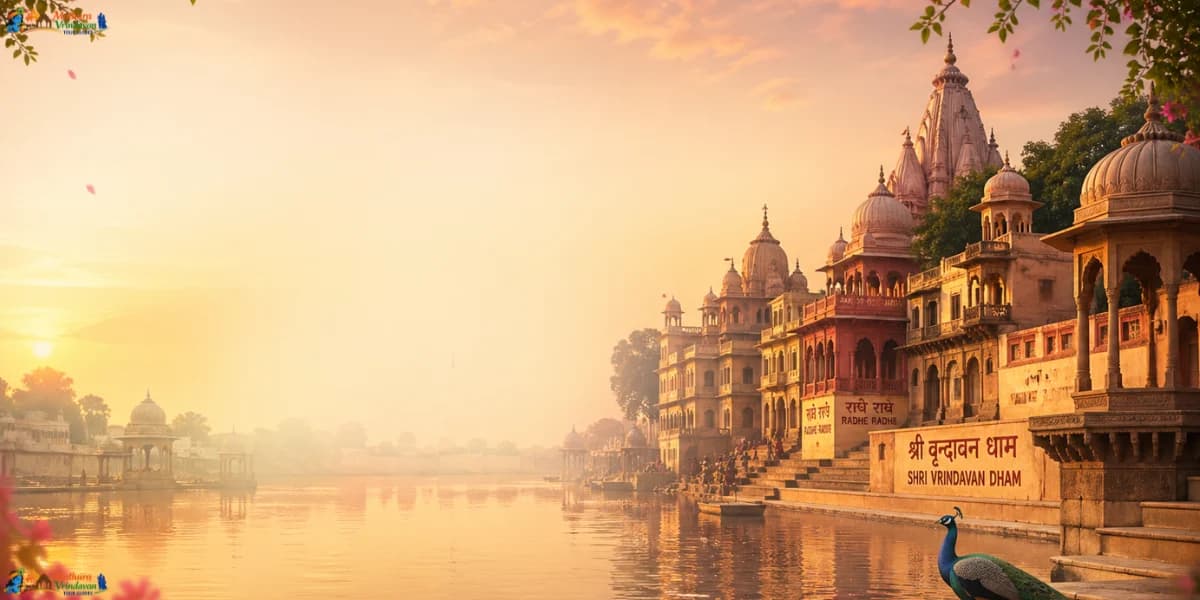
Radha Raman Temple Vrindavan: Darshan Guide 2026
Rajkumar Chaudhary
17 October 2026
Radha Raman Temple in Vrindavan was established around 1542 by Gopala Bhatta Goswami and is renowned for its deity of Krishna, traditionally believed to have manifested from a sacred Shaligram Shila. The temple's published schedule lists morning darshan from 8:00 AM to 12:30 PM and evening darshan from 6:00 PM to around 8:00 PM, with seasonal and ritual variations. Entry is generally free; visitors should confirm the day's timings before travelling, especially during festivals and special seva occasions.
Ready for your Braj Yatra?
Let us design the perfect pilgrimage package for you.
Radha Raman Temple is one of the most important historic temples in Vrindavan, Uttar Pradesh. Known for its distinctive deity of Lord Krishna, traditional worship practices and connection with the Gaudiya Vaishnava tradition, the temple attracts devotees throughout the year. For pilgrims planning a visit in 2026, understanding its history, darshan timings, aarti schedule and location can make the journey easier.
Located in the old part of Vrindavan, Radha Raman Temple is surrounded by narrow lanes and several other historic shrines. It can be included in a walking itinerary with nearby temples, although visitors should allow additional time for crowds and local access restrictions.
Unlike larger temple complexes with spacious entrances, visiting Radha Raman Temple is closely connected with the traditional atmosphere of old Vrindavan. The temple's daily worship schedule is important when planning your visit, especially if you want to attend a particular aarti.
Radha Raman Temple Vrindavan: Quick Information
| Detail | Information |
|---|---|
| Temple name | Radha Raman Temple |
| Location | Old Vrindavan, Mathura district, Uttar Pradesh |
| Main deity | Shri Radha Raman Ji, Lord Krishna |
| Historical association | Gopala Bhatta Goswami |
| Approximate establishment | Around 1542 AD, according to temple tradition |
| Temple tradition | Gaudiya Vaishnavism |
| Darshan schedule | Morning and evening, subject to daily timings |
| Entry | General entry is usually free |
| Best season | October to March for generally cooler weather |
| Nearest railway station | Mathura Junction |
| Official temple website | https://radharaman.org/ |
Temple schedules, access arrangements and ritual timings may change. Confirm the current information with the temple before travelling.
History of Radha Raman Temple
Radha Raman Temple has a long association with the devotional history of Vrindavan. Its origins are traditionally linked to Gopala Bhatta Goswami, one of the prominent saints associated with the Gaudiya Vaishnava movement.
During the 16th century, Vrindavan developed into an important centre of Krishna worship. Saints and scholars travelled to the region, established places of worship and helped preserve the devotional traditions associated with Lord Krishna.
Gopala Bhatta Goswami is remembered for his devotion and his role in establishing the Radha Raman worship tradition. The temple is generally dated to around 1542 AD, although visitors should understand that historical accounts and religious traditions may describe particular events differently.
Today, the temple remains an important destination for devotees who wish to experience Vrindavan's older religious heritage.
Who was Gopala Bhatta Goswami?
Gopala Bhatta Goswami was one of the revered Goswamis associated with the development of Gaudiya Vaishnavism in Vrindavan. He is remembered for his devotional practices, scriptural learning and contribution to the region's religious traditions.
His association with Radha Raman Temple gives the shrine a special place among Vrindavan's historic temples.
For visitors interested in the history of Krishna worship, the temple offers an opportunity to learn about a tradition that has continued for centuries.
Why Is Radha Raman Temple Famous?
The temple is particularly known for its deity of Shri Radha Raman Ji. According to the temple's religious tradition, the deity of Krishna manifested from a sacred Shaligram Shila worshipped by Gopala Bhatta Goswami.
This belief is central to the temple's identity and devotional significance.
Radha Raman Temple is also known for:
Its connection with the 16th-century devotional history of Vrindavan.
Its traditional daily worship and aarti ceremonies.
Its importance within the Gaudiya Vaishnava tradition.
Its location among the historic temples of old Vrindavan.
Its continued role as a place of worship for local residents and pilgrims.
Visitors should approach the temple respectfully, remembering that it is an active place of worship rather than simply a historical attraction.
Radha Raman Temple Darshan Timings 2026
Radha Raman Temple follows a daily worship routine that includes darshan, aarti and other religious services. Unlike some larger temples, darshan may not be available continuously throughout the day.
Published schedules commonly list the following general darshan periods:
| Darshan period | Commonly published timing |
|---|---|
| Morning darshan | Approximately 8:00 AM to 12:30 PM |
| Evening darshan | Approximately 6:00 PM to 8:00 PM |
These timings should be treated as a planning reference, not a guarantee for every date in 2026. The temple's seasonal schedule, special worship, festivals and other religious occasions can affect the daily programme.
Before visiting, check the temple's official website at Radha Raman Temple or contact the temple directly for the current day's schedule.
What time should you arrive?
If morning darshan is your priority, arrive with enough time to reach the temple before the published darshan period begins. Remember that parking, walking through the old lanes and local crowd management may add time to your journey.
For an evening visit, check the current closing time and allow enough time for darshan before the temple's scheduled closure.
If you are visiting several temples on the same day, avoid scheduling each stop too tightly. A change in one temple's routine can affect the rest of your itinerary.
Radha Raman Temple Aarti Timings
Aarti is an important part of the temple's daily worship. The temple follows traditional rituals at different times of the day, with the schedule changing according to the season and religious calendar.
Commonly published winter schedules include the following approximate aarti timings:
| Aarti or seva | Approximate winter timing |
|---|---|
| Mangala Aarti | 5:30 AM |
| Dhoop Aarti, morning | 9:00 AM |
| Shringar Aarti | 10:30 AM |
| Raj Bhog Aarti | 12:30 PM |
| Dhoop Aarti, evening | 5:30 PM |
| Sandhya Aarti | 7:00 PM |
| Shayan Aarti | 9:30 PM |
The aarti schedule is not necessarily the same as the general darshan schedule. Some rituals take place outside the usual public darshan periods, and access arrangements may differ.
The timings above are indicative rather than a confirmed calendar for every day of 2026. Check the official temple schedule before planning your journey around Mangala Aarti, Shringar Aarti or another specific ceremony.
Is Mangala Aarti worth attending?
For devotees interested in early-morning worship, Mangala Aarti can be a meaningful part of the pilgrimage. However, an early visit requires advance planning, particularly if you are travelling from Mathura or staying outside the old Vrindavan area.
Check the current start time, access arrangements and transport options before leaving your accommodation.
Best Time to Visit Radha Raman Temple
The best time to visit depends on whether you are primarily interested in darshan, aarti, historical sightseeing or a wider Vrindavan pilgrimage.
October to March
The cooler months are generally comfortable for exploring the old town on foot. December and January can bring cold mornings and evenings, so warm clothing is useful for early darshan.
This period is popular with pilgrims, and weekends or festival dates may be busy.
April to June
Summer temperatures in the Mathura-Vrindavan region can become very high. If visiting during these months, plan around the temple schedule, carry water where permitted and avoid unnecessary walking during the hottest part of the day.
July to September
The monsoon season can bring rain, humid conditions and wet or slippery lanes. Comfortable footwear and a flexible schedule are advisable.
Best time of day
Morning is practical for visitors who want to combine Radha Raman Temple with other historic shrines. Evening can also work well if the temple's current darshan schedule suits your itinerary.
There is no universally quiet time. Crowd levels depend on the day, festivals, local events and the number of visiting pilgrims.
For more seasonal planning advice, see our Mathura Vrindavan temple guide.
How to Reach Radha Raman Temple
Radha Raman Temple is situated in the old town of Vrindavan. Visitors can reach the town by road from Mathura and then continue towards the historic temple area.
From Mathura Junction
Mathura Junction is the main railway station used by many visitors travelling to Vrindavan. The road journey is approximately 12–15 km, depending on the route and the exact drop-off point.
The journey time can vary considerably because of traffic, road conditions and restrictions near the old temple area.
From Delhi
Visitors travelling from Delhi can reach Mathura and Vrindavan by road or rail. The overall journey depends on the departure point, transport mode and traffic conditions.
If you plan to visit Radha Raman Temple and several other shrines in one day, starting early from Delhi is advisable. However, the itinerary should account for the possibility of traffic delays and long queues.
Our same-day Mathura Vrindavan tour from Delhi guide provides additional planning information.
Can a car reach the temple entrance?
The lanes around Radha Raman Temple are narrow, and private cars may not be able to reach the entrance. Depending on local restrictions, you may need to get out at an accessible point and walk the remaining distance.
During busy periods, local police and traffic arrangements may change where vehicles can stop. Follow current directions rather than relying entirely on a map's final driving point.
Temples to Visit Near Radha Raman Temple
One advantage of visiting Radha Raman Temple is its location among the historic shrines of old Vrindavan. Several nearby temples can be combined into a walking section of your pilgrimage.
1. Banke Bihari Temple
Banke Bihari Temple is one of Vrindavan's best-known pilgrimage destinations. It attracts large numbers of devotees, especially on weekends and festival days.
The temple and Radha Raman Temple can be included in the same itinerary, but their darshan schedules are different. Check both schedules before deciding which one to visit first.
Read our Banke Bihari Temple darshan guide for additional planning information.
2. Radha Vallabh Temple
Radha Vallabh Temple is another important historic shrine in Vrindavan. Its devotional traditions and temple architecture make it a useful addition for visitors exploring the older religious sites.
Because the old-town lanes can be crowded, allow enough time to walk between the temples.
3. Govind Dev Ji Temple
Govind Dev Ji Temple is associated with Vrindavan's historic temple landscape and the development of Krishna worship in the region.
It can be included in a heritage-focused itinerary, subject to the available time and current access arrangements.
4. Banke Bihari and nearby old-town shrines
The old Vrindavan area contains several smaller temples and sacred places. Rather than attempting to visit every shrine, select the places that are most important to you and allow time for darshan.
5. ISKCON Krishna Balaram Mandir
ISKCON Krishna Balaram Mandir is located away from the narrow lanes of the historic temple area. It is known for devotional singing, organised worship and its Krishna-Balaram deities.
You can visit it before or after the old-town temples, depending on the current schedules and transport arrangements.
6. Prem Mandir
Prem Mandir is a large temple complex known for its white marble architecture, landscaped surroundings and evening illumination.
It is often more convenient to visit later in the day, but check the current visitor schedule before planning around the illumination.
Read our Prem Mandir light show timing guide before your visit.
Suggested One-Day Vrindavan Temple Itinerary
If Radha Raman Temple is one of your priorities, you can organise a one-day itinerary around the old-town shrines and then continue to temples in other parts of Vrindavan.
The following is a flexible example rather than a fixed schedule.
Early morning: Begin with a temple whose current schedule suits your arrival time. If you intend to attend Mangala Aarti at Radha Raman Temple, verify the timing and access arrangements in advance.
Morning: Visit Radha Raman Temple during its published darshan period. Depending on crowd levels and walking conditions, continue to Radha Vallabh Temple or another nearby historic shrine.
Late morning: Visit Banke Bihari Temple if its current darshan schedule permits. Allow extra time for the queue and the walk through the old lanes.
Afternoon: Take a meal break and rest. Some temples pause public darshan between morning and evening, so use this period carefully rather than assuming every temple will remain open.
Late afternoon: Visit ISKCON Krishna Balaram Mandir, subject to its current schedule.
Evening: Finish at Prem Mandir if the available time and transport arrangements permit.
This itinerary may need to be shortened on weekends, festival days or occasions when temple access is restricted. If attending a particular aarti is essential, organise the remaining visits around that commitment.
For a planned route covering the principal shrines, consider our One Day Vrindavan Tour Package.
Can You Visit Radha Raman Temple With Family and Senior Citizens?
Yes. Families and senior citizens can include Radha Raman Temple in their pilgrimage, provided the route and walking requirements are considered.
The main challenges are the narrow lanes, uneven surfaces, crowded access points and the possibility of standing during darshan.
A few practical measures can make the visit easier:
Choose a time based on the confirmed temple schedule.
Use a suitable vehicle drop-off point and follow local traffic directions.
Avoid carrying unnecessary bags or valuables.
Wear comfortable footwear for walking.
Allow additional time for older family members.
Keep drinking water and regular breaks in mind, subject to temple rules.
Avoid scheduling too many temples without a rest period.
If a member of your group has difficulty walking or standing for long periods, discuss the route before finalising the day.
What Should You Wear at Radha Raman Temple?
Modest and comfortable clothing is appropriate for visiting Radha Raman Temple. Traditional Indian clothing is suitable, but other modest outfits that allow comfortable walking are also practical.
During winter, carry a jacket, shawl or sweater, particularly if you are planning an early-morning visit.
The old-town lanes may be uneven or crowded, so comfortable footwear is useful. Follow any instructions displayed by the temple authorities and avoid carrying unnecessary belongings.
Photography and Mobile Phone Rules
Photography rules can vary between temple areas and may be restricted during worship or near the deity. Do not assume that photography is permitted simply because other visitors are taking pictures.
Ask temple staff before photographing the interior or a religious ceremony. Follow any instructions about mobile phones, cameras, bags and personal belongings.
The priority should be to respect the worship environment and the privacy of other devotees.
Is Radha Raman Temple Included in a Mathura Vrindavan Tour Package?
Radha Raman Temple can be included in a customised Mathura-Vrindavan pilgrimage, depending on the time available, the current temple schedule and the other places you want to visit.
A one-day tour is suitable for travellers focusing on selected major temples in Vrindavan. If you also want to visit Mathura, Govardhan or Barsana, a longer itinerary is generally more comfortable.
You can compare options through our Mathura Vrindavan tour packages.
For travellers who want to combine Mathura, Vrindavan and Agra, the 3 Days Agra Mathura Vrindavan Tour Package offers a longer trip with more room for sightseeing.
A package can help organise transport between locations, but it should not be treated as a guarantee of priority entry or a fixed darshan duration. Temple access and worship schedules remain subject to the relevant authorities.
Final Travel Advice
Radha Raman Temple offers a meaningful introduction to the historic devotional traditions of Vrindavan. Its association with Gopala Bhatta Goswami, the distinctive deity of Shri Radha Raman Ji and the temple's daily worship make it an important stop for pilgrims.
For a smoother visit in 2026, confirm the latest darshan and aarti schedule, allow time to walk through the old-town lanes and keep your itinerary flexible. If you want to visit several temples, plan around their individual schedules rather than assuming that all shrines will be open throughout the day.
For more information about temple visits and transport planning, explore the Mathura Vrindavan temple guide or browse our tour packages.
A well-planned pilgrimage leaves enough time not only to reach each temple but also to experience its atmosphere without rushing from one entrance to the next.