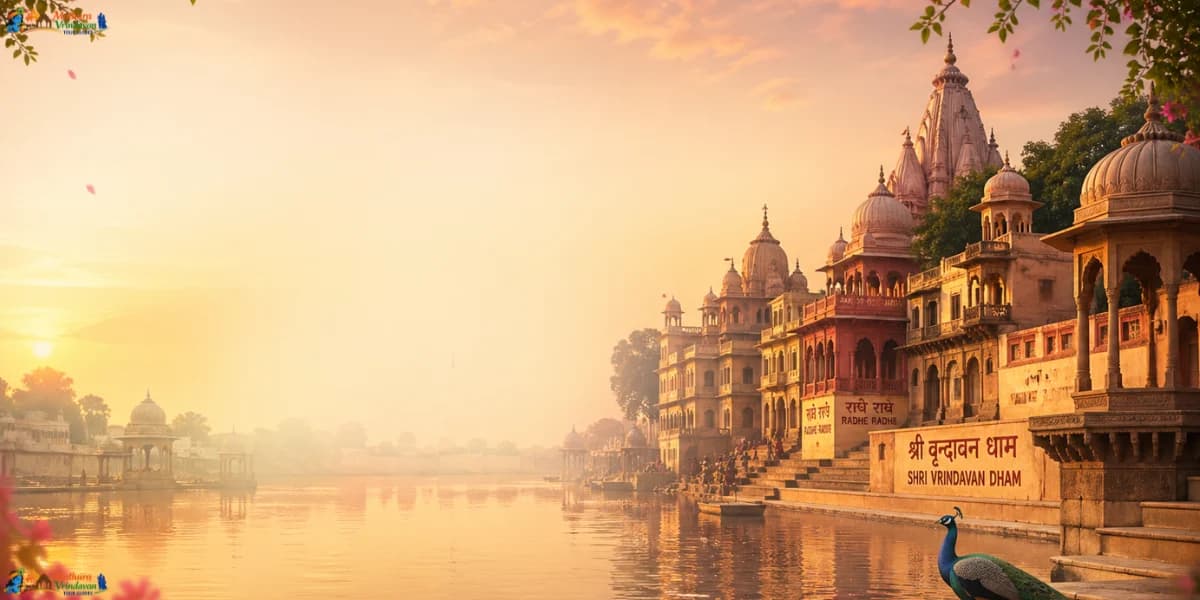
Best Time to Visit Vrindavan Month Wise: Complete Travel Guide
Rajkumar Chaudhary
6 October 2026
The best time to visit Vrindavan for comfortable sightseeing is generally October to March. Winter months from November to February are pleasant for temple visits, while February and March are especially popular for experiencing the Holi celebrations of Braj. April to June can be very hot, while July to September brings the monsoon season.

Ready for your Braj Yatra?
Let us design the perfect pilgrimage package for you.
Vrindavan can be visited throughout the year, but the experience changes considerably from month to month. The weather, temple crowds, festivals and road conditions all affect how comfortable a trip feels. If you are planning a Vrindavan trip, choosing the right month can make it easier to visit temples, walk through the old lanes and explore nearby places in Braj.
For most travellers, October to March is the most comfortable period for sightseeing. November, December, January and February bring cooler weather, while February and March are particularly popular for visitors who want to experience the famous Holi traditions of Braj.
The summer months can be very hot, while July to September brings the monsoon season. These months can still be suitable for a pilgrimage, particularly around important festivals, but they require more planning.
In this month-wise guide, we explain what you can expect in Vrindavan throughout the year and which months are better for different types of travellers.
If you are planning a complete pilgrimage, you can also explore our Mathura Vrindavan Tour Packages for one-day, two-day and longer Braj itineraries.
January – Cold Winter Mornings and Comfortable Sightseeing
January is one of the coldest months in Vrindavan.
Early mornings can be particularly chilly, especially if you are travelling from Delhi or arriving for an early temple visit. Afternoons are generally more comfortable, making it easier to walk around the temple areas.
If you visit in January, carry a warm jacket, sweater or shawl. Comfortable shoes are also important because several temple areas require walking.
January is suitable for visitors who prefer cooler weather rather than summer heat. However, winter holidays and weekends can bring significant crowds.
Important places to include are:
Banke Bihari Temple
Prem Mandir
ISKCON Krishna Balaram Mandir
Radha Raman Temple
Nidhivan
Mathura's Shri Krishna Janmabhoomi
Vishram Ghat
For information about the major religious sites, see our Mathura Vrindavan Temple Guide.
February – Pleasant Weather and the Beginning of Holi Season
February is one of the better months to visit Vrindavan.
The weather generally becomes more comfortable compared with January, particularly during the daytime. It is a good period for walking through Vrindavan's older areas and visiting several temples.
February can also mark the beginning of the Holi season in Braj, depending on the Hindu calendar. Celebrations are not limited to one day, and different towns and temples have their own traditions.
If you are interested in experiencing Braj Holi, check the festival calendar before booking your trip because dates change each year.
February is also suitable for families and older travellers because the weather is generally easier to manage than summer.
March – Best Month for the Holi Experience
March is one of the busiest and most colourful periods in Braj.
Vrindavan, Barsana and Nandgaon are famous for their Holi celebrations. Events take place at different temples and locations over several days.
For travellers who want to experience the cultural side of Braj, March can be an excellent choice.
However, there is an important trade-off.
More festival activity means more crowds.
Roads around popular temples can become extremely busy. Parking may be difficult, and walking routes can take longer than usual.
If your main objective is peaceful temple sightseeing, March may not be the easiest month. If your priority is experiencing Braj's Holi traditions, however, it can be one of the most interesting times to visit.
Plan accommodation and transport well in advance around major festival dates.
You can also consider our Same Day Govardhan Barsana Tour Package if you want to explore more of the Braj region.
April – Increasing Temperatures
April marks the beginning of the hotter period.
Morning temple visits can still be comfortable, but afternoons become increasingly warm. If you are planning to walk through the old lanes of Vrindavan, it is better to complete most outdoor activities earlier in the day.
Carry water, sunglasses and suitable clothing.
A sensible April itinerary could begin with morning darshan, followed by a meal and rest during the hottest hours. Evening visits can then be planned when temperatures become more manageable.
Travellers who dislike cold weather may find April more comfortable than the winter months, but it is not as pleasant for continuous outdoor sightseeing.
May – Very Hot Weather
May is generally one of the hottest months in Vrindavan.
Daytime sightseeing can become tiring, particularly when walking between temples or waiting in crowded areas.
If you need to visit during May, plan your day around the weather. Early morning and evening are preferable for outdoor activities.
During the middle of the day, take a longer break at your accommodation or choose indoor activities where possible.
For a summer visit, carry:
Water
Sunglasses
Sunscreen
Light cotton clothing
Comfortable footwear
A hat or umbrella
May is not usually the first choice for travellers looking for comfortable sightseeing, but dedicated pilgrims can still visit the important temples by planning carefully.
June – Hot Weather Before the Monsoon
June can remain very hot, although the weather begins transitioning towards the monsoon later in the month.
Long outdoor walks should be avoided during the hottest part of the day.
If you are travelling from Delhi, leaving early can make the road journey more comfortable. Once in Vrindavan, organise temple visits during the morning and evening.
A private vehicle can also be useful during hot weather because it reduces the need to wait for local transport between different areas.
For travellers wanting to visit Mathura, Vrindavan and nearby Braj locations, a multi-day itinerary is generally more manageable than trying to cover everything in one day.
Our 2 Days Mathura Vrindavan Tour Package can be considered for a more relaxed pilgrimage.
July – Monsoon Begins
July brings the monsoon season to the region.
Rainfall can provide some relief from the summer heat, but humidity and wet roads can affect sightseeing.
If you are visiting during July, keep some flexibility in your itinerary. Sudden rain can slow road travel and make walking through some areas less convenient.
Carry:
An umbrella
Light rainwear
Waterproof footwear or sandals
A small waterproof bag for valuables
Extra clothes
The monsoon can also create a different atmosphere around the temples and ghats.
Visitors who do not mind occasional rain may find July quieter than the peak winter and Holi periods.
August – Krishna Festivals and Devotional Atmosphere
August can be an important month for Krishna devotees.
Janmashtami, the festival celebrating the birth of Lord Krishna, usually falls in August or September depending on the Hindu calendar.
Vrindavan and Mathura can become particularly busy around major festival dates. Temples may have special programmes, decorations and extended devotional activities.
If you want to travel specifically for Janmashtami, check the exact festival date for the year of your visit.
Crowds can be significantly higher than on ordinary days, so allow additional time for transport, security checks and temple entry.
For travellers who are mainly interested in quiet sightseeing, a date away from the main festival may be more comfortable.
September – Monsoon and Festival Travel
September can still have monsoon conditions, although rainfall patterns vary.
The weather may be more manageable than the peak summer months, but humidity and rain remain possible.
This month can be suitable for travellers who want to avoid the hottest part of the year and do not mind changing plans according to the weather.
Before travelling, check the forecast and keep your temple itinerary flexible.
A good September itinerary can include the main Vrindavan temples along with Mathura if road conditions are favourable.
October – Start of the Comfortable Season
October is generally a good transition month for visiting Vrindavan.
The intense summer heat has passed, and conditions gradually become more suitable for outdoor sightseeing.
It is a useful month for travellers who want to explore temples without the colder mornings of December and January.
October is also a good period for exploring destinations beyond central Vrindavan.
You can include Govardhan, Barsana, Gokul and other Braj locations if you have enough time.
If Agra is also part of your travel plans, our 3 Days Agra Mathura Vrindavan Tour Package combines the Taj Mahal area with Mathura and Vrindavan.
November – One of the Best Months for Vrindavan
November is one of the most comfortable months for visiting Vrindavan.
The daytime weather is generally suitable for sightseeing, while evenings become cooler.
This makes November a good choice for families, couples, senior citizens and first-time visitors.
You can comfortably plan morning temple visits and spend the afternoon exploring Mathura or taking a break before returning to Vrindavan in the evening.
The number of visitors can increase around weekends and religious occasions, so popular temples may still be crowded.
For a first Braj trip, November offers a good balance between weather and sightseeing.
December – Cool Winter and Popular Temple Visits
December is another popular month for Vrindavan.
Morning and evening temperatures can be cold, but afternoons are usually more comfortable for walking.
If you plan an early morning darshan, wear warm layers. A jacket or shawl can be particularly useful before sunrise.
December is suitable for visiting Banke Bihari Temple, Prem Mandir, ISKCON, Radha Raman and other important temples.
Evening visits to Prem Mandir are especially popular because visitors can see the illuminated temple complex.
For travellers coming from Delhi, December is also a practical period for a weekend Mathura Vrindavan trip.
You can explore our One Day Vrindavan Tour Package from Delhi if you have limited time.
Best Months to Visit Vrindavan for Comfortable Weather
If weather is your main consideration, October to March is generally the preferred period.
Among these months:
November to February: Best suited to cooler-weather sightseeing.
February to March: Best for visitors interested in Holi celebrations.
October and November: Good for comfortable temple visits without the coldest winter conditions.
December and January: Suitable for winter travellers who do not mind chilly mornings.
There is no single perfect month for everyone. Your choice should depend on whether weather, festivals, crowds or temple visits are your priority.
Best Time to Visit Vrindavan for Holi
If you want to experience Braj Holi, February and March are the months to consider.
The exact dates change every year according to the Hindu calendar.
Holi celebrations in Braj have their own local traditions, and activities can take place in Vrindavan, Barsana, Nandgaon and other locations.
Barsana is particularly associated with Lathmar Holi, while Vrindavan has its own temple-based Holi celebrations.
The festival period is very busy, so do not expect normal travel times.
Book accommodation early and allow extra time for road travel and walking.
Best Time to Visit Vrindavan for Families
For families, November to February is generally a comfortable choice.
The cooler weather makes outdoor sightseeing easier than during May or June.
Families with children should still avoid overloading the itinerary. Three or four major temples in a day may be more practical than trying to visit ten locations.
Take regular meal and rest breaks, especially when travelling with young children or elderly family members.
Best Time to Visit Vrindavan for Senior Citizens
Senior citizens can visit throughout the year, but the cooler months are generally easier for walking and sightseeing.
November to February is a practical period, provided early mornings are managed carefully because temperatures can be low.
Temple crowds are another important consideration. Banke Bihari Temple and other popular locations can involve standing and walking through crowded areas.
Plan fewer temples per day and keep enough time for rest.
Best Time for a Mathura and Vrindavan Trip
If you want to combine both destinations, October to March is generally the most comfortable period.
A two-day itinerary works better than trying to cover both towns in a few hours.
Day 1: Mathura
Visit Shri Krishna Janmabhoomi, Dwarkadhish Temple and Vishram Ghat.
Day 2: Vrindavan
Visit Banke Bihari Temple, Radha Raman Temple, ISKCON, Nidhivan and Prem Mandir according to the current temple schedules.
You can adjust this depending on your arrival and departure times.
Best Time to Add Govardhan and Barsana
If you have more than two days, consider extending your itinerary to other parts of Braj.
Govardhan is associated with Govardhan Hill and its parikrama tradition. Barsana is known for Radha Rani Temple and its connection with Radha-related traditions of Braj.
These destinations can be visited as part of a wider Braj itinerary.
For travellers interested in exploring more of the region, the Braj 84 Kos Yatra Package offers a longer pilgrimage through different parts of Braj.
Month-Wise Quick Guide
Here is a simple way to choose your travel month:
| Month | Weather | Best For |
|---|---|---|
| January | Cold | Winter temple visits |
| February | Pleasant | Temple visits and early Holi events |
| March | Warm | Holi celebrations |
| April | Hotter | Morning and evening sightseeing |
| May | Very hot | Short temple visits |
| June | Very hot | Early morning travel |
| July | Monsoon | Quieter pilgrimage trips |
| August | Monsoon | Krishna festivals |
| September | Monsoon | Flexible sightseeing |
| October | Pleasant | Temple and Braj sightseeing |
| November | Comfortable | General pilgrimage |
| December | Cool | Winter temple visits |
Tips for Planning a Vrindavan Trip
Regardless of the month, a few practical points can make the trip easier.
First, check the current temple timings before travelling. Temple schedules can change during festivals and special religious occasions.
Second, do not underestimate walking time. Several important temples are located in narrow lanes where cars cannot reach the entrance.
Third, carry only essential belongings when visiting temples because security arrangements and restrictions vary.
Fourth, keep some flexibility in your itinerary. Crowds, traffic and temple schedules can change your actual travel time.
Finally, choose your month according to the type of experience you want.
If you want comfortable weather, choose winter.
If you want Holi, choose the relevant February or March festival period.
If you want Krishna festival celebrations, check the Janmashtami calendar.
If you prefer fewer visitors, consider travelling outside major festival periods.
Final Thoughts
Vrindavan is a destination that can be visited throughout the year, but October to March generally provides the most comfortable conditions for sightseeing.
November, December, January and February are particularly suitable for travellers who want cooler weather and temple-focused itineraries. March is different because the focus shifts towards the famous Holi celebrations of Braj.
Summer can be challenging because of high temperatures, while the monsoon months require flexibility because of rainfall.
There is no universally perfect month. The right time depends on what you want from your trip.
For a first visit, a two-day Mathura and Vrindavan itinerary during the cooler months is a sensible option. It gives you enough time to visit the main temples without rushing between every location.
If you want to explore more of Braj, you can extend the trip to Govardhan, Barsana, Gokul and other nearby destinations.
Explore our Mathura Vrindavan Tour Packages to find an itinerary based on your available days and preferred destinations.
Contact Mathura Vrindavan Tour Guides
For help planning your Vrindavan trip, temple visits, transport or a wider Braj itinerary, contact:
Mathura Vrindavan Tour Guides
Phone: 9058430503
Website: mathuravrindavantourguides.com